January 15, 2026

5 min
Read


Have you ever wondered how top-performing global teams stay coordinated and productive while working remotely?
The answer lies in online collaboration tools. These platforms are not just chat apps or file-sharing systems, they provide a centralized workspace that allows you to track tasks, communicate in context, and automate workflows in real time.
Workiom helps teams worldwide overcome these challenges with structure, automation, and transparency.
Our platform enables structured collaboration, automation, and transparency for remote teams of any size. Here’s how online collaboration tools are transforming remote work globally.
The first challenge of remote work is structural. In-office teams rely on physical presence, verbal check-ins, visual cues, and paper-based workflows.
None of that exists remotely. Without structure, remote teams often default to disorganized chats and reactive tasking.
Online collaboration platforms replace that with clear, structured workspaces that align everyone on what’s happening, who’s responsible, and when things are due.
With Workiom, remote teams globally can:
This clarity allows remote teams to operate with the same structure as in-office teams, but with far greater transparency and accountability.
One of the biggest challenges in remote work is fragmented communication. Important messages live in chats, emails, or calls, separate from where work is done. This disconnect leads to missed tasks, duplicated efforts, and unclear priorities.
Online collaboration tools solve this by embedding communication directly into the task and workflow environment.
In Workiom, teams can:
This embedded communication model keeps everyone aligned and eliminates the “lost in Slack or email” issue that slows down many remote teams.
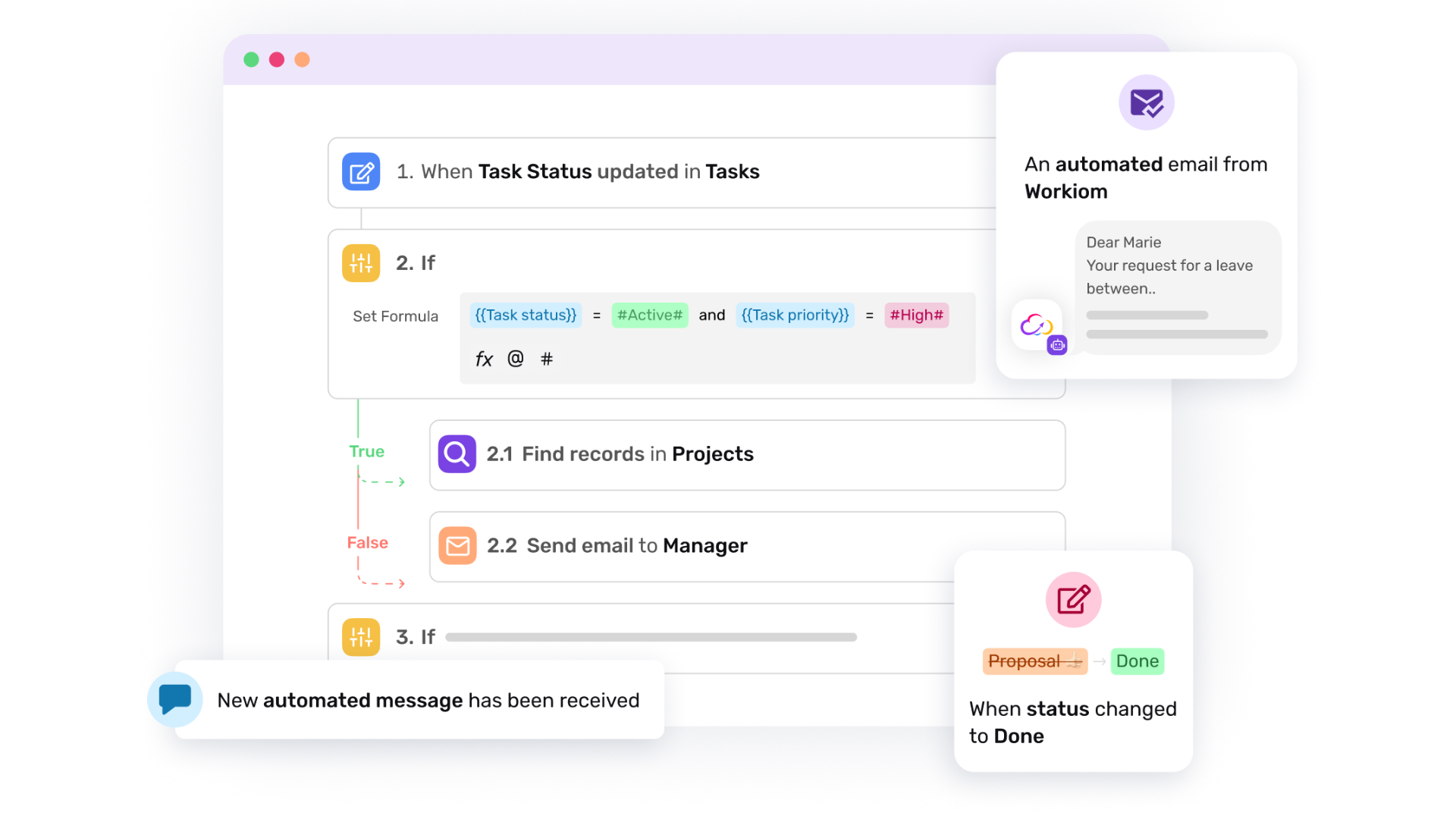
One of the lesser-discussed challenges in remote work is over-reliance on managers for basic coordination. When everything needs to be approved, assigned, or reviewed manually, leaders become bottlenecks, and teams slow down.
Online collaboration tools with automation capabilities remove these bottlenecks by enabling:
This shift from manual to automated task handling empowers remote teams to move faster, with fewer dependencies, while still ensuring processes are followed consistently.
Remote work doesn’t mean reduced compliance. Organizations across sectors are expected to maintain rigorous standards for:
Online collaboration platforms like Workiom provide built-in compliance features that help remote teams meet these expectations:
This level of transparency makes remote work not only viable but measurable, auditable, and secure across regions.
This table highlights how structured collaboration, automation, and visibility are far easier to achieve with a platform like Workiom.
While technology solves the operational side, maintaining engagement and ownership is equally critical. Workiom helps by:
This approach minimizes remote work friction and helps employees stay engaged, productive, and satisfied.
For teams spread across time zones and regions:
These steps make Workiom suitable for fully global teams, not just local or hybrid setups.
Remote work isn’t just the future, it’s the new standard for global organizations.
With Workiom, your team can collaborate seamlessly, automate key workflows, and maintain compliance across regions, all within a single intelligent platform.
Give your remote teams the clarity, control, and confidence they need to succeed anywhere.
Contact us or start your free trial and see how Workiom brings structure and harmony to distributed work.
They enable real-time task tracking, automate routine workflows, centralize communication, and ensure compliance across different regulatory environments. Platforms like Workiom also support multilingual UI, granular permissions, and secure cloud infrastructure.
Yes. Workiom’s automation engine supports:
Workiom offers:



.svg)
.svg)